Report of the War Office Committee of Enquiry into "Shell-Shock"
Dublin Core
Title
Report of the War Office Committee of Enquiry into "Shell-Shock"
Description
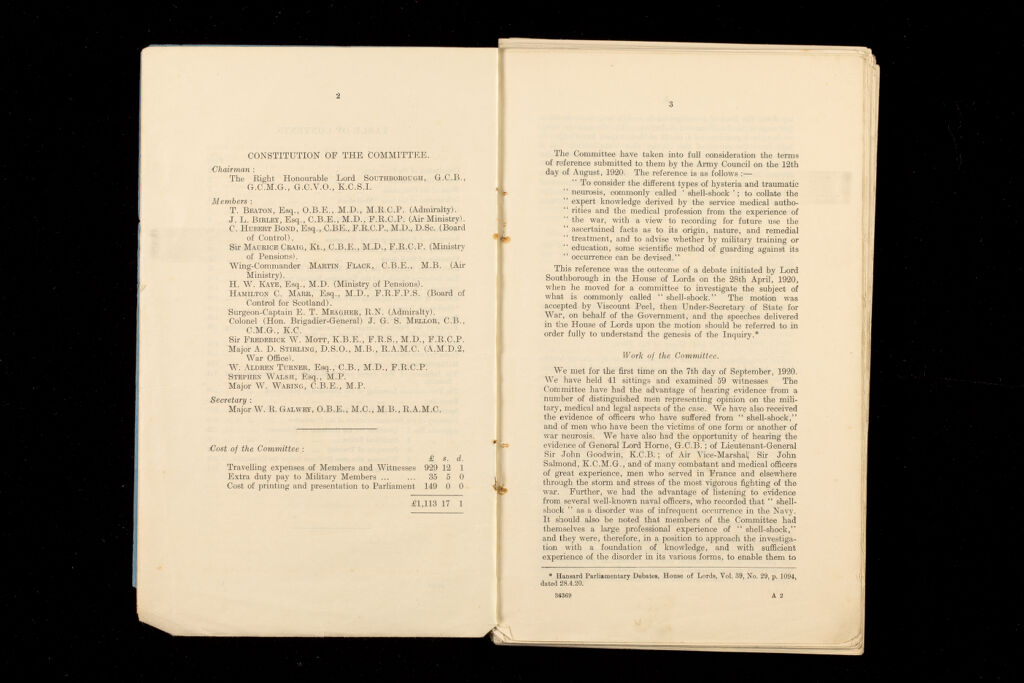
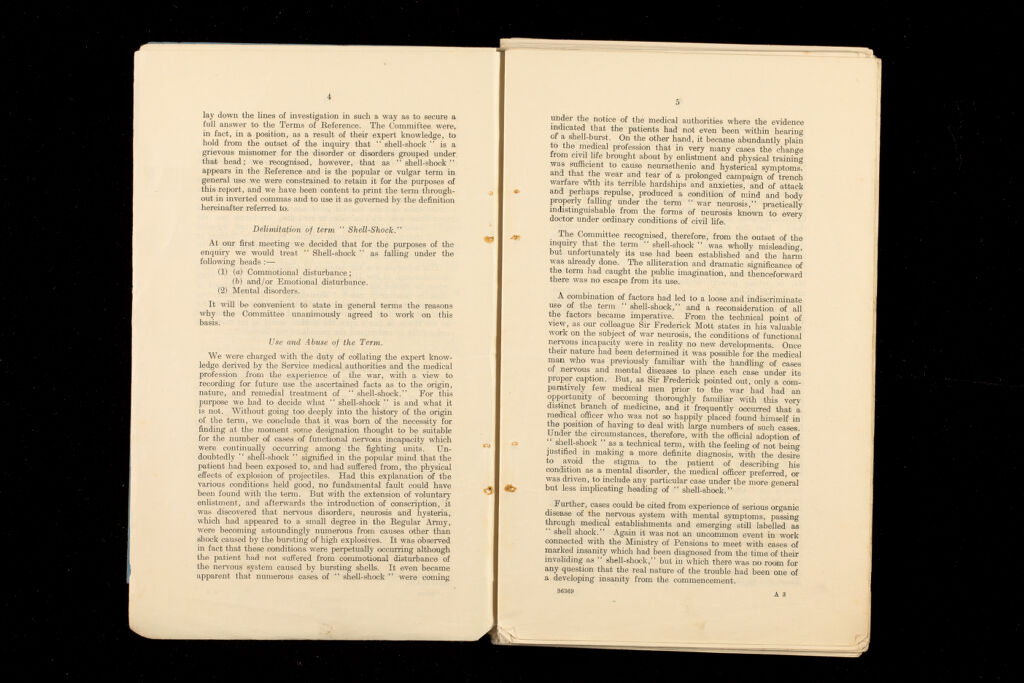
In June of 1922, the War Officer Committee of Enquiry published their report on shell-shock and its treatment during the Great War. In 1922, the term which the War Office Committee references most often is war neurasthenia, or simply neurasthenia. In 1980, the American Psychological Association would add Post-Traumatic Stress Disorder (PTSD) to the third edition of the Diagnostic and Statistical Manual of Mental Disorders. Like PTSD, shell-shock describes a traumatic event, but unlike shell-shock, PTSD references traumatic contexts beyond combat and war: the two terms are not equivalent, nor are their historical contexts contiguous. The Report of the War Officer Committee is an apt example of the controversial nature of shell-shock: throughout its pages, the term is lambasted as an ineffectual means of describing the traumatic effects of war. While the purported purpose of the report is to describe subject of war neurasthenia and its proper diagnosis and treatment, it also responds to worry among the families of shell-shocked men, who brought forth complaints of military negligence in treating shell-shock cases. Its unstated primary purpose was to banish doubt in the government’s ability to address cases of trauma, on a public stage.
Creator
Lord Southborough
Source
Publisher
His Majesty's Stationary Office
Date
1922
Rights
Royal Army Medical Corps Muniments Collection, Attribution-NonCommercial 4.0 International (CC BY-NC 4.0)
Collection
Citation
Lord Southborough, “Report of the War Office Committee of Enquiry into "Shell-Shock",” Shellshock Popular Culture Archive, accessed October 25, 2026, https://shellshockpopularculturearchive.com/omeka/items/show/11.
Embed
Copy the code below into your web page