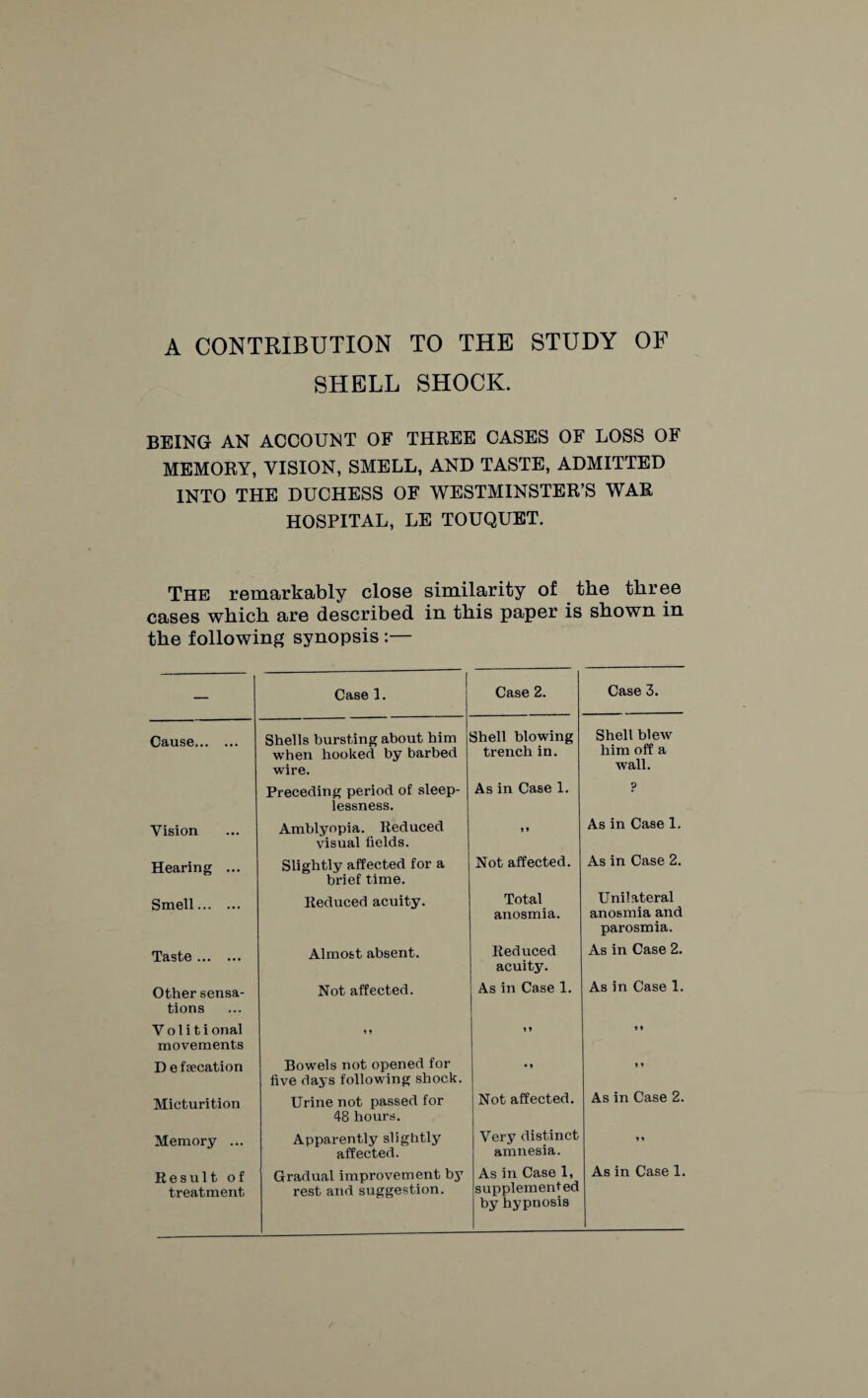
A contribution to the study of shell shock : being an account of three cases of loss of memory, vision, smell, and taste, admitted into the Duchess of Westminster's War Hospital, Le Touquet
Dublin Core
Title
A contribution to the study of shell shock : being an account of three cases of loss of memory, vision, smell, and taste, admitted into the Duchess of Westminster's War Hospital, Le Touquet
Subject
The controversial term shell-shock was initially coined by Charles S. Myers in this article from 1915, a term which he cribbed from the lexicon of soldiers.
Description
Shell-shock did not exist as a documented category of disability until February 1915, when psychologist Charles Myers published a paper in The Lancet entitled “A Contribution To The Study of Shell Shock: Being An Account of Three Cases of Loss of Memory, Vision, Smell, and Taste.” During his work as a military doctor in France and as a specialist commissioned by the Royal Army Medical Corps (RAMC), Myers observed and recorded the symptoms of patients who had diminished sensory functions and memories (Myers 317-318). Myers tentatively associated these symptoms with the shock of falling shells, but was cautious to avoid assigning any definitive answer for these symptoms, though he surmised, “The close relation of these cases to those of ‘hysteria’ appears fairly certain” (320). Myers adopted the term ‘shell-shock” from the parlance of soldiers: his study brought the term into institutional use.
Creator
Charles S. Myers
Source
Publisher
The Lancet
Date
1915
Collection
Citation
Charles S. Myers, “A contribution to the study of shell shock : being an account of three cases of loss of memory, vision, smell, and taste, admitted into the Duchess of Westminster's War Hospital, Le Touquet,” Shellshock Popular Culture Archive, accessed October 25, 2026, https://shellshockpopularculturearchive.com/omeka/items/show/12.
Embed
Copy the code below into your web page