Browse Items (31 total)
Sort by:

Keep smiling! : More news by Liarless for German homes

The following item shows a pictorial comic, featuring two men standing in the foreground, while the background features a green wall with a black door in it. On the wall, a sign reads, "Bones Broken While You Wait." One man uses crutches, while the…
Lucia Rudini: Somewhere in Italy

Published in 1918, Lucia Rudini: Somewhere in Italy by Martha Trent is part of the Somewhere series. Each volume details the story of a girl in a different country during the First World War. Cloth. Illustrated.
From the dustcover: "Around a…
From the dustcover: "Around a…
Marieken de Bruin: Somewhere in Belgium

Published in 1918, Marieken de Bruin: Somewhere in Belgium by Martha Trent is part of the Somewhere series. Each volume details the story of a girl in a different country during the First World War. The hardback cover is olive, with the image of a…
Report of the War Office Committee of Enquiry into "Shell-Shock"
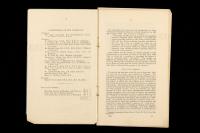
In June of 1922, the War Officer Committee of Enquiry published their report on shell-shock and its treatment during the Great War. In 1922, the term which the War Office Committee references most often is war neurasthenia, or simply neurasthenia.…
Repression of War Experience

In his poem "Repression of War Experience," Siegfried Sassoon uses a metaphor of moths, who "blunder in," only to "scorch their wings with glory, liquid flame," like soldiers who believed that they would prove themselves heroes through war. Like…
Song of the Mud

Published in Current Opinion in 1917, Mary Borden wrote of her experiences as a woman at war in her poem "The Song of the Mud." Throughout the poem, Borden enumerates the various qualities of mud, an environmental threat on the battlefield of war,…
Strange Meeting

Wilfred Owen’s poem portrays two speakers meeting in “some profound dull tunnel, long since scooped / Through granites which titanic wars had groined” (2-3). This granite tunnel is the aftermath of titanic wars, an image which reflects afterlife as…